
Seagrass returns to the River Hamble for the first time in decades
Pioneering project aims to restore lost underwater habitat, and one of the UK’s most threatened habitats
Seagrass has returned to the River Hamble for the first time in decades, thanks to a major restoration effort by Hampshire & Isle of Wight Wildlife Trust, marking a landmark step forward for marine conservation in the county.
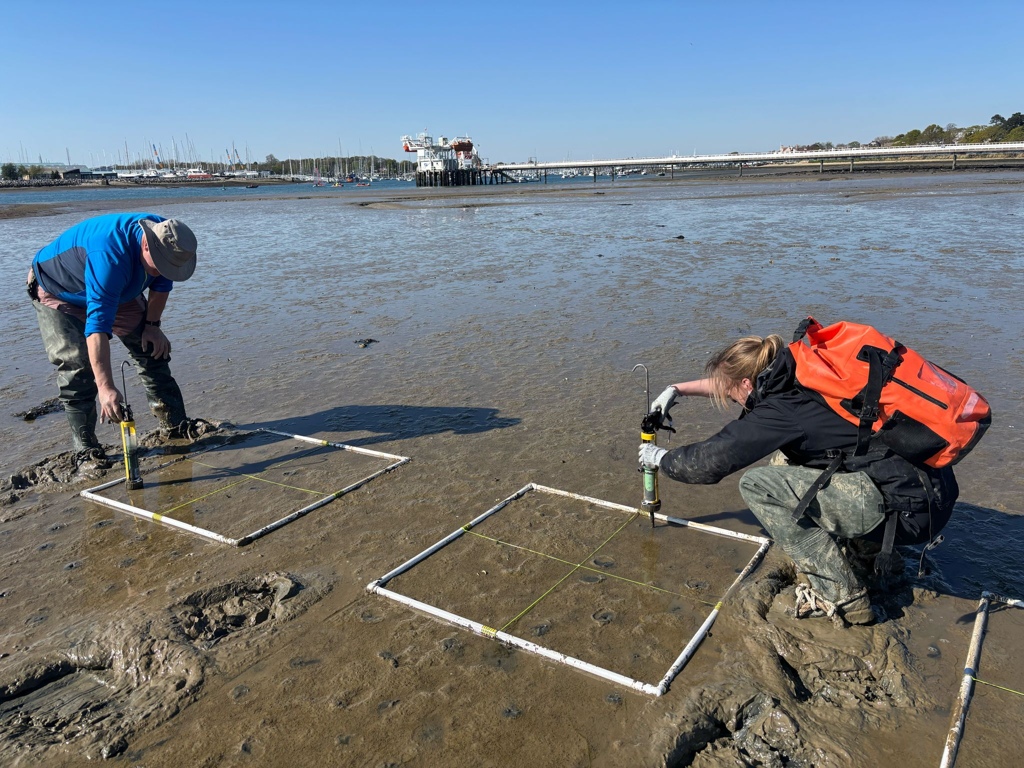
Tim Ferrero and Ellie Parker planting seagrass seed in the River Hamble © Caitlin Woombs
On 10 April 2025, 2,000 seeds were planted directly into the seabed by the Trust’s marine conservation team. This is the first time seagrass has been sown in the Hamble since its once-abundant underwater meadows were lost to disease and degradation nearly a century ago.
Seagrass is one of the UK’s most important – and most threatened – marine habitats. It provides a safe nursery for marine life including pipefish, cuttlefish and thornback rays, improves water quality, stores carbon, and protects our coastline from erosion. Yet across the UK up to 92% of seagrass meadows have been lost over the past 100 years due to pollution, dredging, boat anchoring and coastal development.
Local loss has been stark. Historical records show that eelgrass once stretched from Southampton Water up the Hamble to Bursledon, until a wasting disease outbreak in the 1930s caused widespread loss. Surveys in 2011 and again in 2023 found no remaining beds.
“This is a huge moment for the River Hamble and for local marine recovery,” said Ellie Parker, Marine Officer at Hampshire & Isle of Wight Wildlife Trust.
“In 2011, we didn’t find a blade of seagrass in the Hamble. To return now with our team to plant thousands of seeds in that same water is a powerful turning point – and a hopeful step towards recovery.”
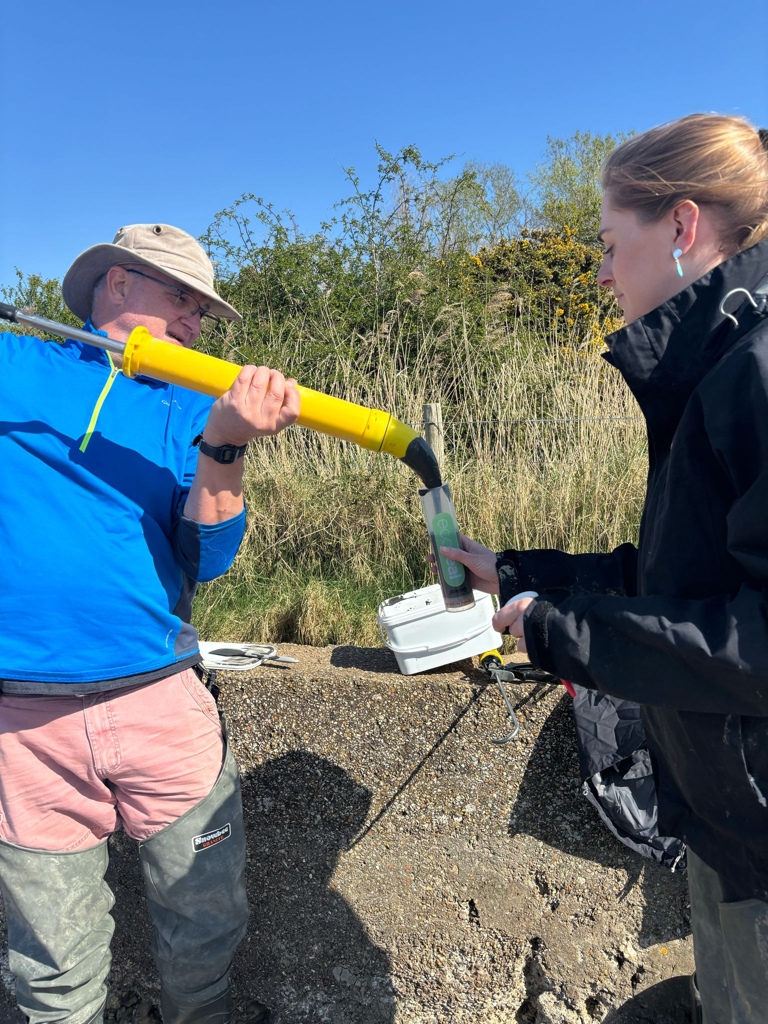
Tim Ferrero and Ellie Parker loading seed sediment into the canisters © Caitlin Woombs
The Trust used an innovative Dispenser Injection Seeding technique, which plants seed directly into the seabed. This technique increases the chances of germination success and reduces disturbance to the marine environment, making it a valuable tool in habitat restoration.
The Zostera seeds used were collected, with the help of dedicated local volunteers, in October 2024 from intertidal beds at Farlington, Portsmouth. After collection, the seeds were safely stored in a cold, dark, high-salinity storage aquarium at the University of Portsmouth’s Institute of Marine Science, which put them in a state of dormancy over the winter months.
Ellie adds: “Restoring seagrass to this historic site for the first time in decades, where it was once abundant, feels incredibly hopeful. By using innovative techniques, and with strong community support, we’re bringing these vital habitats back – not just for nature, but for the future health of our seas. We’re so excited to see what flourishes here in the months and years ahead.”
The planting is part of the Trust’s efforts to restore seagrass habitats across the Solent. In total, more than 58,000 seeds have been planted this year by the Trust, along with dedicated volunteers, at key restoration sites in Hampshire and the Isle of Wight, including Calshot, Seaview and now the River Hamble.
The work forms part of the Solent Seascape Project, a regional partnership to restore marine habitats. Seagrass planting by Hampshire & Isle of Wight Wildlife Trust draws on the charity’s knowledge of the Solent’s marine environment and long-term commitment to recovery.
About Hampshire and Isle of Wight Wildlife Trust
Hampshire & Isle of Wight Wildlife Trust is committed to creating a wilder future by 2030, where nature is recovering, wildlife is returning, and ecosystems are being restored across our counties. With the support of more than 29,000 members, we want to see many more people on nature’s side. We aim to engage 1 in 4 people, encouraging them to take action for nature by becoming part of Team Wilder.
We want to see at least 30% of land and sea transformed into wilder places where nature is recovering by 2030. We are already doing this by expanding our nature reserves, ensuring land outside them is working for wildlife, restoring missing species and campaigning for the right policies to drive the change we need. But we need much more of this rapid, positive action to tackle the climate and ecological crises and to create a wilder future for us all.
We’re part of the UK-wide movement of 46 Wildlife Trusts, all standing up for the natural world. Together, we are the nation’s most active and influential nature conservation partnership. Each Trust works within its local community to inspire people and bring about positive change. Discover and protect local wildlife on your doorstep with Hampshire & Isle of Wight Wildlife Trust www.hiwwt.org.uk